
Life in West Linn
A walk down Historic Willamette, the closest thing West Linn has to a downtown
The Main Street district in West Linn's Willamette neighborhood: the Wednesday summer street market, the food and drink, the historic buildings, and how the river shaped the whole thing.
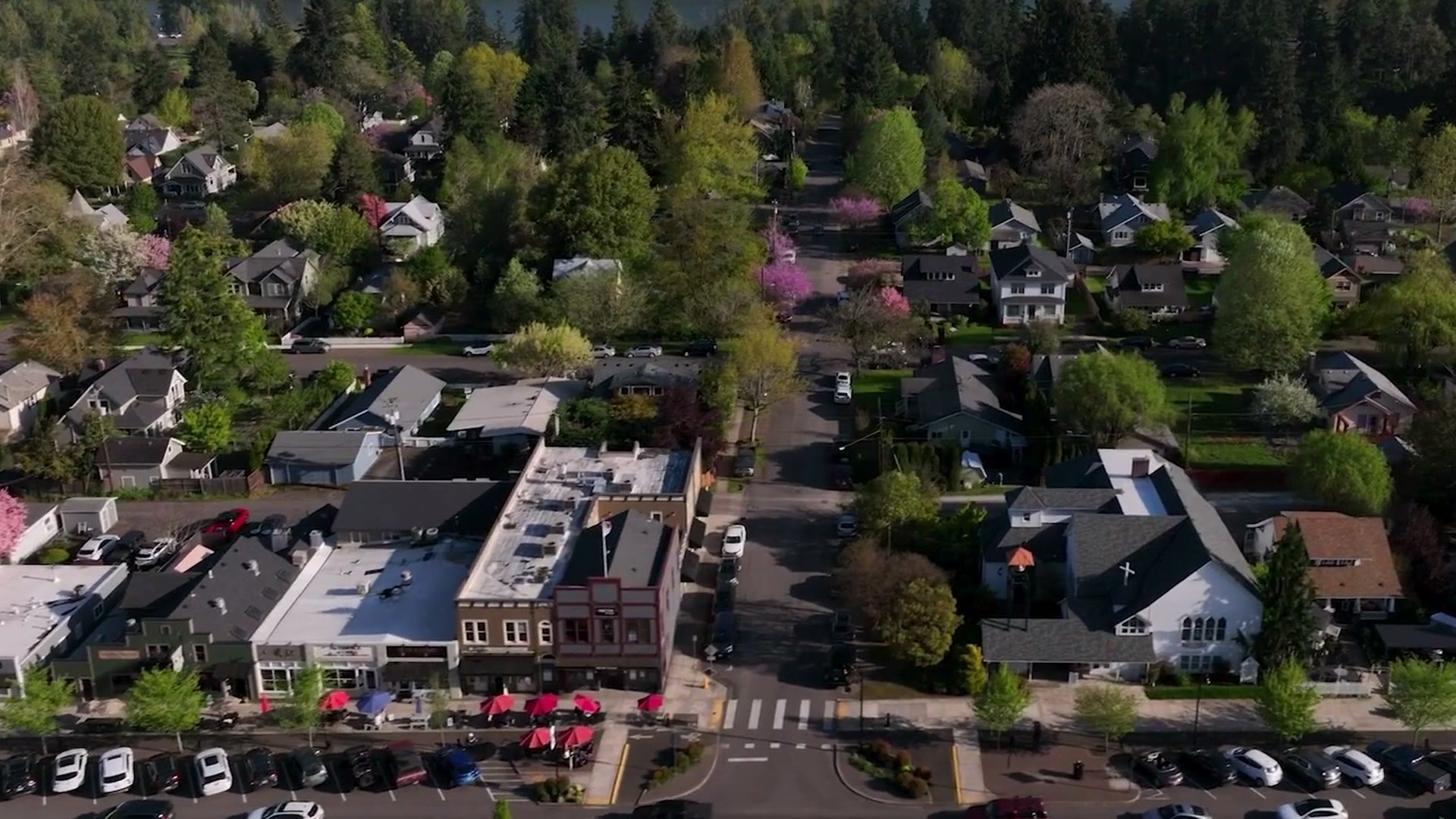
Most towns this size do not have a downtown anymore. West Linn does, and a lot of people who live here have not really walked it.
It is in the Willamette neighborhood, at the south end of town where the Tualatin River comes into the Willamette. Locals just call it Historic Willamette. If you are trying to get a feel for whether this town suits you, spend an hour there before you spend a weekend looking at houses.
It was its own town first
That is the part that explains the rest. Willamette was a separate city before it merged into West Linn, and the Main Street district still reads that way: a compact commercial strip of early twentieth century storefronts, on a real street grid, with houses close enough that people walk in.
That history is why the buildings sit shoulder to shoulder instead of behind parking lots. It is also why the district has its own association, Historic Willamette Main Street, working to keep the storefronts occupied and the street active rather than letting it drift into a row of offices.
Wednesday evenings, May through September
If you visit once, make it a Wednesday in summer.
The Wednesdays in Willamette summer street market runs mid-May through mid-September, 4 to 8 p.m., along Willamette Falls Drive between 12th and 15th Streets. They close the street. There is fresh produce and there are handmade goods, and because this is Oregon, there are also the local wineries, cideries, distilleries, and cocktail vendors set up alongside the vegetables.
One detail I like: kids between 5 and 12 can sign up at the information booth for the Power of Produce program and get tokens to spend on produce, honey, or starts to plant. It is a small thing that tells you what kind of market it is.
A standing weekly street market is the sort of thing that turns an address into a neighborhood. You run into people. That is the whole point.
The rest of the year
The market is seasonal, the street is not. Historic Willamette keeps a working mix of food and drink along Willamette Falls Drive, the kind of independent places where the person behind the counter recognizes you by the third visit. The district association keeps a current list of what is open on their site, which is more reliable than anything I could freeze into a blog post.
The other constant is the water. Willamette Park sits at the confluence, about fifteen acres of riverfront within walking distance of Main Street. Willamette Falls, one of the largest waterfalls by volume in the Northwest, is at the edge of town on the river between here and Oregon City. The falls are the reason there is a town here at all, and there is an active effort to reopen the historic Willamette Falls Locks, closed since 2011, which would put boats back through the river again.
What it is not
Honest version, because I would rather you know before you buy.
It is not a nightlife district. Things close early. If you want a dense walkable core with a dozen dinner options past nine, this is not that, and West Linn generally is not that.
It is also small. You can walk the commercial stretch in ten minutes. The appeal is not variety, it is that it is genuinely yours: the same street, the same faces, a market you can walk to on a Wednesday.
For a lot of people that trade is the entire reason they move here. For some it is too quiet. Both answers are fine, and I would rather you figure out which one you are on a Wednesday evening in July than after closing.
If you want to see the neighborhoods within walking distance of that street, I live and work here and I am always glad to show you around. Reach out any time.